Hold the Handrail: How UK Commutes Are Rewriting Webtoon Panels
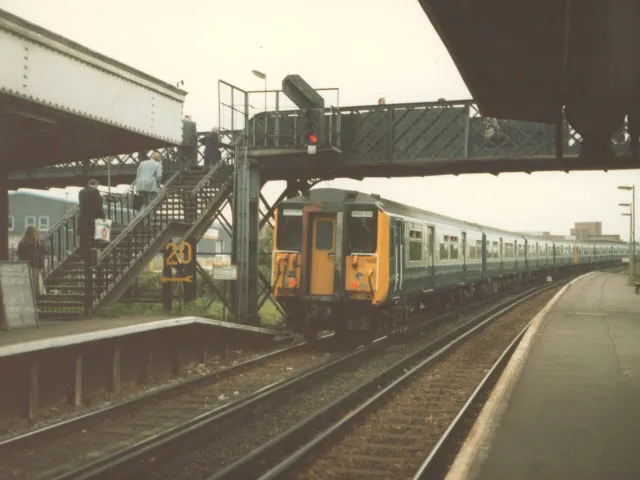
Photo: Stephen Craven, CC BY-SA 2.0, via Wikimedia Commons
The 08:17 does not care about your immersive world-building. It cares that you have one hand on a handrail, a bag between your feet and roughly ninety seconds before the announcement tells you to mind the gap. That is the reality in which a lot of UK webtoon reading now happens. Not on a sofa, not in a beanbag, but in the jagged little windows of a commute.
Ask readers where they binge and you will hear a map of interruptions: the Northern line, the Elizabeth line, a number 42 bus, a café table near Leeds station, a waiting room in Cardiff, the ten minutes before a shift starts. The commute has become a reading format in its own right. And it is quietly changing the way webtoon panels are built.
The stop-start reading window
A commute is not one reading session. It is five tiny ones. You read for two stops, get bumped, lose your place, find it again, swipe through a fight scene, then shove your phone in your pocket because the doors are opening. Webtoons already suit this better than print comics. There is no page turn, no fold, no awkward double-page spread. Just thumb down. But not every vertical comic is commute-friendly. The difference is rhythm.
Creators talk about thumb-stop pacing: every few swipes, there should be a reason to pause. A hook, a joke, a reveal, a silent beat, a change of colour palette. It is not about cramming more story into every screen. It is about giving the reader a place to stop that also makes them want to start again. On a train, that might be the only panel they see before the doors open.
Thumb-stop pacing beats spectacle
A splash page is a beautiful thing. It is also a terrible thing to return to when you have been nudged by a commuter and lost your place. Print splash pages are built for a page turn; vertical splash pages can be stunning, but if a chapter opens with a full-screen cityscape and no text, a commuter might swipe past it before the train has left the platform. The best commute-friendly webtoons use splash pages as punctuation, not paragraphs.
That does not mean every panel has to be small. It means the layout has to be legible in motion. Big faces, clear silhouettes, short bursts of dialogue and generous gutters do more for a one-thumb reader than a gorgeous double-page spread that demands stillness. The panel is not competing with a gallery wall. It is competing with a train announcement, a delayed service and a stranger's rucksack.
Three tricks that survive a train change
1. The three-screen hook. Open with a clear status quo, a disruption and a question. Three screens, three swipes, three reasons to keep going. It is not a formula for every series, but it is a reliable way to make the first minute of a commute count. A reader can enter a chapter cold, get the emotional weather and decide whether to keep scrolling before the next stop.
2. The visual anchor. When a scene changes, a recurring colour cue or a repeated image helps the reader re-enter after an interruption. A red coat, a window, a particular font for a text message. It sounds small, but it is the difference between a reader who feels lost and a reader who feels pulled back in. In a stop-start session, continuity is a kindness.
3. The silent beat. Not every screen needs dialogue. A quiet panel can act like a breath, and it gives the thumb a natural pause. It also makes the next line hit harder. On a busy bus, silence is easier to read than a wall of speech bubbles. The best creators use it like a rest in music: not empty space, but timing.
Why splash pages lose on the 08:17
This is not an argument against ambition. Some of the most memorable webtoon moments are huge, cinematic panels. But the commute rewards a different kind of craft. It rewards clarity, repetition and rhythm. It rewards a creator who understands that the reader might be looking at their phone in a tunnel with no signal, one bar of battery and a bag on their lap.
That is why so many UK readers talk about rereading. A chapter that feels thin on a sofa can feel generous on a train because you notice the panel beats you missed. A chapter that feels spectacular on a big screen can feel annoying on a bus because it asks for attention you do not have. The commute is a stress test for panel design, and the results are revealing.
The UK reading map
There is also the practical side: downloads, data and dead zones. UK readers are ruthless about this. They download episodes before going underground. They learn which apps hold their place and which ones reset. They know the difference between a reading session that fits a platform wait and one that needs a proper sit-down. The commute has made us all amateur usability testers.
And yet the commute is not the enemy of webtoon reading. It is the format's most honest mirror. It shows which panels are doing the work and which ones are just decoration. It shows whether a cliffhanger lands in one swipe or five. It shows that a story does not need to be read in perfect conditions to be absorbing. Sometimes it just needs to be built for the hand that is holding the rail.
So the next time you see someone on the 08:17 swiping through a chapter with one thumb, do not assume they are skimming. They are reading in the native rhythm of the format: interrupted, impatient, and still hooked. The panel designers who understand that are the ones who will keep UK readers scrolling all the way to their stop.