The Permanent Bookmark: Inside the UK Tattoo Studios Inking Webtoon Panels for Life
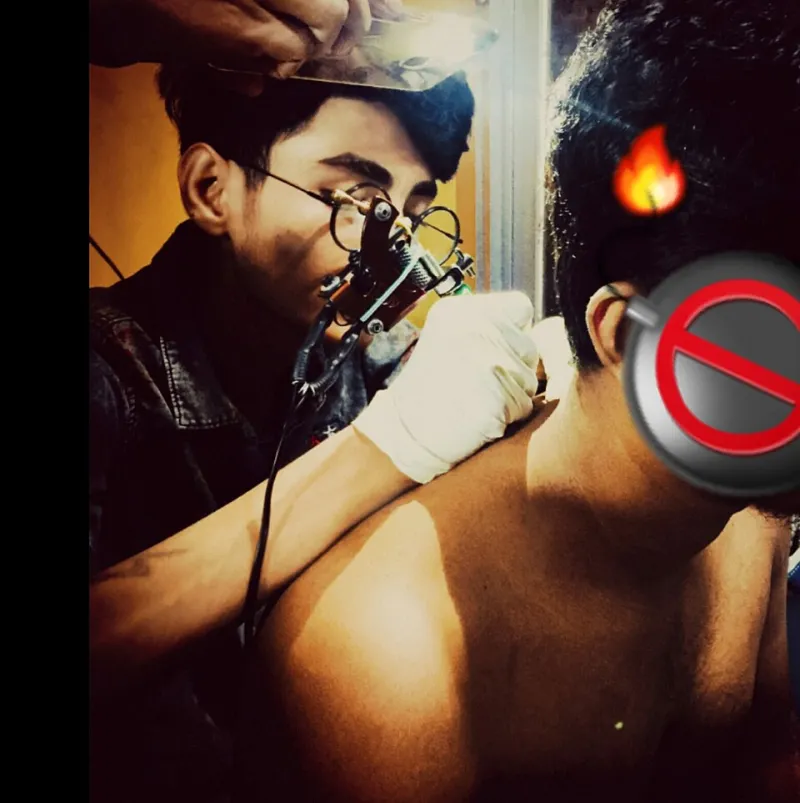
Photo: munshiganjtattooart, CC BY-SA 4.0, via Wikimedia Commons
There is a particular kind of quiet in a tattoo studio on a wet Wednesday in Leeds. The buzz of the machine, the rustle of cling film, the low hum of a kettle. And then, on the artist’s iPad, a vertical strip of panels: a rain-streaked window, two characters not quite holding hands, a speech bubble left deliberately blank. The client has brought a webtoon scene to be inked along their forearm. It is not a logo. It is a bookmark.
That scene is playing out more often across the UK in 2026. Tattoo artists from Bristol to Glasgow say the same thing in different ways: the references arriving in their inboxes are changing. Less skull-and-snake flash, more soft-lined romance panels. Less band logo, more fantasy arc. Webtoon readers are not simply buying merch any more. They are booking chairs.
From Scroll to Skin
A webtoon panel is built for a very specific kind of attention. It is vertical, intimate and designed to be read in bed, on the Tube, in the ten minutes before a shift. That scale matters. A poster shouts. A panel whispers. When a reader decides to keep one, they are not trying to capture an entire series. They are trying to keep a moment.
That is why the requests arriving in UK studios tend to be small in scope but heavy in feeling: a hand reaching across a gutter, a character framed by a window, a two-shot that says everything without dialogue. The panel is a unit of story, and tattoos are very good at story. The challenge is translation.
The Fine-Line Romance
Artists across the UK note that fine-line work has become the natural home for webtoon-inspired commissions. It makes sense. Romance panels often rely on negative space, delicate expressions and a limited palette. Fine-line tattooing can hold that softness, especially on forearms, ribs and ankles. Fantasy arcs are a different job altogether. Full sleeves demand mapping: a panel that reads top-to-bottom on a phone has to wrap around an elbow, bend at the wrist and survive the way skin ages.
“A panel is a rectangle,” one Manchester artist tells clients. “Your arm is not.” That is the whole craft in a sentence. The best adaptations simplify. They boost contrast, drop the tiny details that will blur, and resize speech bubbles so they do not turn into unreadable smudges. The result is rarely a straight copy. It is an edit made with the original in mind.
The Credit Conversation
The credit question is not a side issue. It is the story. Webtoon creators are not vending machines for tattoo flash, and a panel pulled from a scrolling app is still someone’s work. Many artists have tattoo policies, paid tattoo passes or specific guidance on what they are comfortable with. Some say yes to personal commissions and no to anything that reproduces a full page. Some ask for a tag. Some ask for a tip. Some ask for both.
UK studios are increasingly part of that conversation. Clients are being asked to show that they have permission, or at least that they have tried. That is not red tape. It is basic fandom manners. A tattoo is not a screenshot. If a creator says no, the answer is no. If they say yes, credit them in the caption, not just in the chair. The permanence of ink should not erase the person who made the panel in the first place.
Why Permanence Changes the Read
A tattoo makes a reader sit with a story differently. A favourite panel has to survive the next plot twist, the hiatus, the ending that lands badly, the ending that lands perfectly. That is a lot to ask of one image. It is also why the best webtoon tattoos tend to be chosen slowly. Readers who wait a season, or reread the arc before booking, tend to come back with references that mean something independent of the cliffhanger.
The chair also changes how you read. You notice composition when it is being traced onto skin. You notice the gutter between panels. You notice how much of the emotion is carried by the space around the characters. A tattoo is fandom with the volume turned down and the stakes turned up. It is a bookmark that cannot be scrolled past.
The Chair as a Reading Nook
There is something quietly lovely about the way UK tattoo studios are becoming reading spaces. Clients arrive with printouts, screenshots and playlists. Artists ask which chapter the panel is from. The conversation moves from linework to story. In a culture that often treats fandom as something that happens only online, the tattoo chair is a reminder that reading is physical too.
So if you are booking a webtoon-inspired piece this year, take the panel seriously. Ask the creator. Pay for the adaptation if that is what they offer. Let the artist simplify. Start smaller than you think. And when it heals, share it with credit, not just pride. The scroll ends. The ink begins. Keep it kind, keep it credited, and keep it clean.