Tape, Tissue and a To-Read List: Inside the UK Webtoon Gift Swap Taking Over December
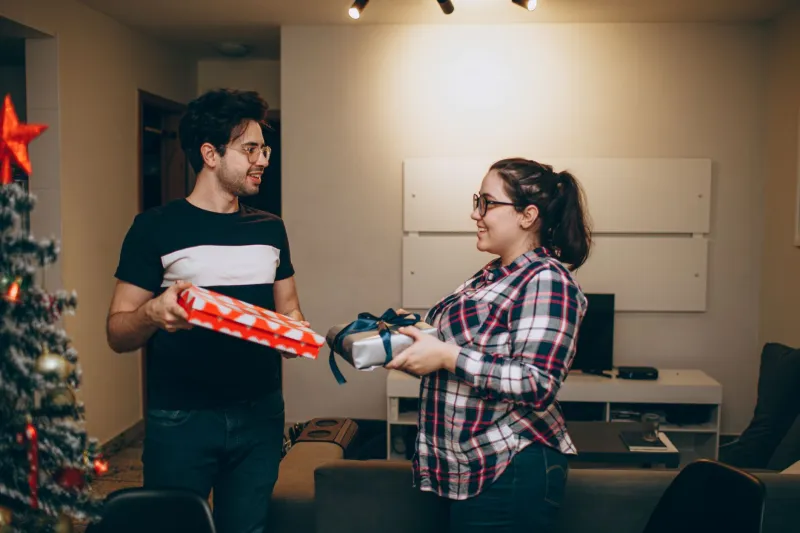
Somewhere in a group chat, a spreadsheet appears. There are columns for handles, posting addresses, favourite genres, squicks, and a grim little box marked "no spoilers past chapter". Sign-ups close on a Sunday. By the following weekend, people are standing in post office queues holding A5 envelopes with washi tape down the side. This is the UK webtoon gift swap, and it has quietly become one of the most heartfelt bits of the fandom calendar.
The premise is simple: you get a name, you get a budget, and you put together a parcel for a stranger who loves the same serialised stories you do. The execution is where it gets interesting.
The Rules Live in a Google Form
Most swaps run on a form that would not look out of place in a small office. Organisers ask for a display name, a postal address, a handful of favourite titles, a few hard no-gos, and whether you are comfortable receiving physical post or would rather have a digital bundle sent by email. There is usually a checkbox for "happy to post internationally" so the Scottish and Northern Irish members do not get quietly stranded at the bottom of the list.
Budgets tend to sit between £10 and £20, with postage counted separately. Some swaps cap the number of items instead — one print, one small extra, one written recommendation — which tends to produce better parcels than a pure cash limit. A £15 ceiling encourages thought; a £40 one encourages panic-buying from whichever online shop still guarantees delivery before the 18th.
Deadlines are staggered on purpose. Sign-ups close in late November, names go out within 48 hours, and parcels are meant to be in the post by the second week of December. Organisers who have done this before build in a buffer for Royal Mail's busiest fortnight and a quiet rescue channel for anyone whose gift goes missing somewhere near Swindon.
Fifteen Quid and a Decent Printer
Walk into any UK print shop in December and you may find someone asking for a matte A5 on 300gsm. Panel prints are the backbone of the swap. Readers screenshot a favourite moment, crop it, and send it off to be printed properly rather than trusting the home printer that has been low on cyan since August.
The etiquette around which panel to choose is subtle. Big emotional beats are popular, but so are quiet ones — a character making tea, a rain-soaked bus stop, a two-frame exchange that only makes sense if you have read the last forty episodes. Choosing a panel for a stranger is a small act of literary criticism. You are saying: this is the bit I think about when I am on the train.
Other staples include laminated bookmarks, sticker sheets, hand-bound mini-zines of favourite quotes, and the now-traditional "emergency chapter" card — a slip of paper recommending three episodes to read when the recipient is having a bad week. Some swaps have started including a small packet of tissues, which reads as a joke until you realise it absolutely is not.
Spoiler Etiquette Is the Whole Thing
Every swap lives or dies on spoiler discipline. The gold standard is a note that names a chapter number and nothing else. "Episode 61. That's all I'm saying." It gives the recipient something to aim at without hollowing out the reveal.
Organisers usually ask for a spoiler threshold at sign-up — the last chapter the person has read — and the rule is that no gift should reference anything beyond it. Break that and you have not given a present, you have given homework with the answers scribbled in the margin.
Content warnings get the same seriousness. A swap parcel is not the place to spring a sudden grim turn on someone who signed up for a cosy romance. The forms are long for a reason, and the people running them are, by and large, extremely good at reading between the lines.
A Present That Argues Back
Here is the thing a wrapped recommendation does that a generic gift cannot: it has a point of view. A box of chocolates says "I did not know what to get you". A print of a rain-soaked bus stop with a note saying "this is the panel that made me join the fandom" says something considerably more specific.
It also creates a small obligation in the nicest possible sense. You read the recommended chapters. You go back to the group chat and report. The swap does not end when the parcel is opened; it carries on into January as people work through their to-read lists and argue about whether the recommended title is actually as good as the sender claimed.
That is the quiet genius of the format. It is a gift exchange that generates conversation, and conversation is the currency of webtoon fandom. Comments sections, Discord servers, pub meet-ups — the whole culture runs on people saying "have you got to the bit yet?".
The Post Office Queue Is Part of the Ritual
There is a distinctly British pleasure in the admin of it all. Weighing an envelope on the kitchen scales. Asking the person behind the counter whether a large letter is still a large letter if it is slightly lumpy. Discovering that the cute rigid envelope you bought is 3mm too thick and now costs twice as much.
Swaps have adapted. Flat envelopes, printed cards rather than framed prints, and digital bundles for anyone who would rather not risk the post. But the physical parcel remains the default, because half the fun is the wrapping. Tissue paper, a bit of ribbon, a handwritten note on the back of a receipt. Nobody is expecting department-store presentation. They are expecting evidence that a real person thought about them for twenty minutes.
Why It Sticks
Webtoon reading is a solitary habit wrapped in a social one. You scroll alone, then immediately want to tell someone. A December swap is that impulse turned into a parcel — a stranger, somewhere in the UK, holding a print of the panel you have been thinking about since summer.
It is also, quietly, a nice corrective to the endless recommendation algorithm. Nobody is optimising for engagement here. Someone just picked a story they love and paid £2.80 to send it across the country.
If you are running a swap this month, the usual advice applies: label your envelope, write the chapter number, and do not trust the last posting dates you saw on a meme. If you are opening one, take your time with it. There is a to-read list in there, and someone is waiting to hear what you thought.